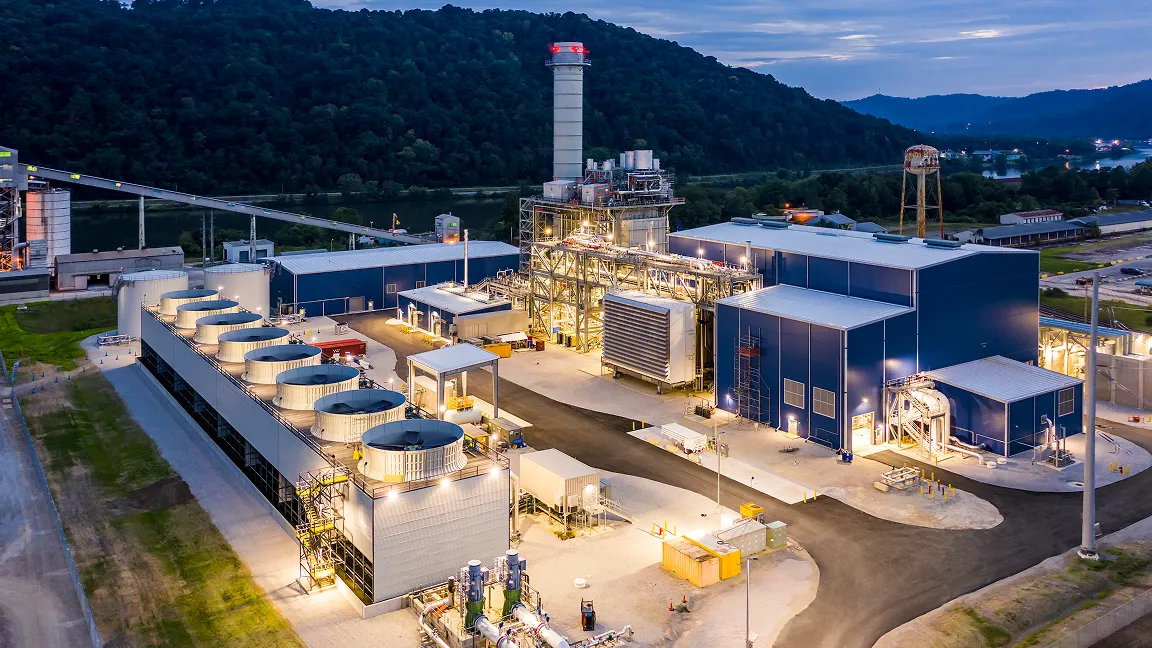
In January 2026, Winter Storm Fern brought extreme cold across the United States, pushing regional power grids to their limits. As temperatures dropped and heating demand surged, grid operators faced the challenge of maintaining system stability under rapidly tightening conditions.
During events like these, reliability depends on resources that can respond quickly. Traditionally, grid operators rely on dispatchable generation — most often peaker plants — to add supply during periods of acute stress. While effective, these plants are expensive to operate and often high-emission.
During Winter Storm Fern, miners like MARA demonstrated a complementary approach.
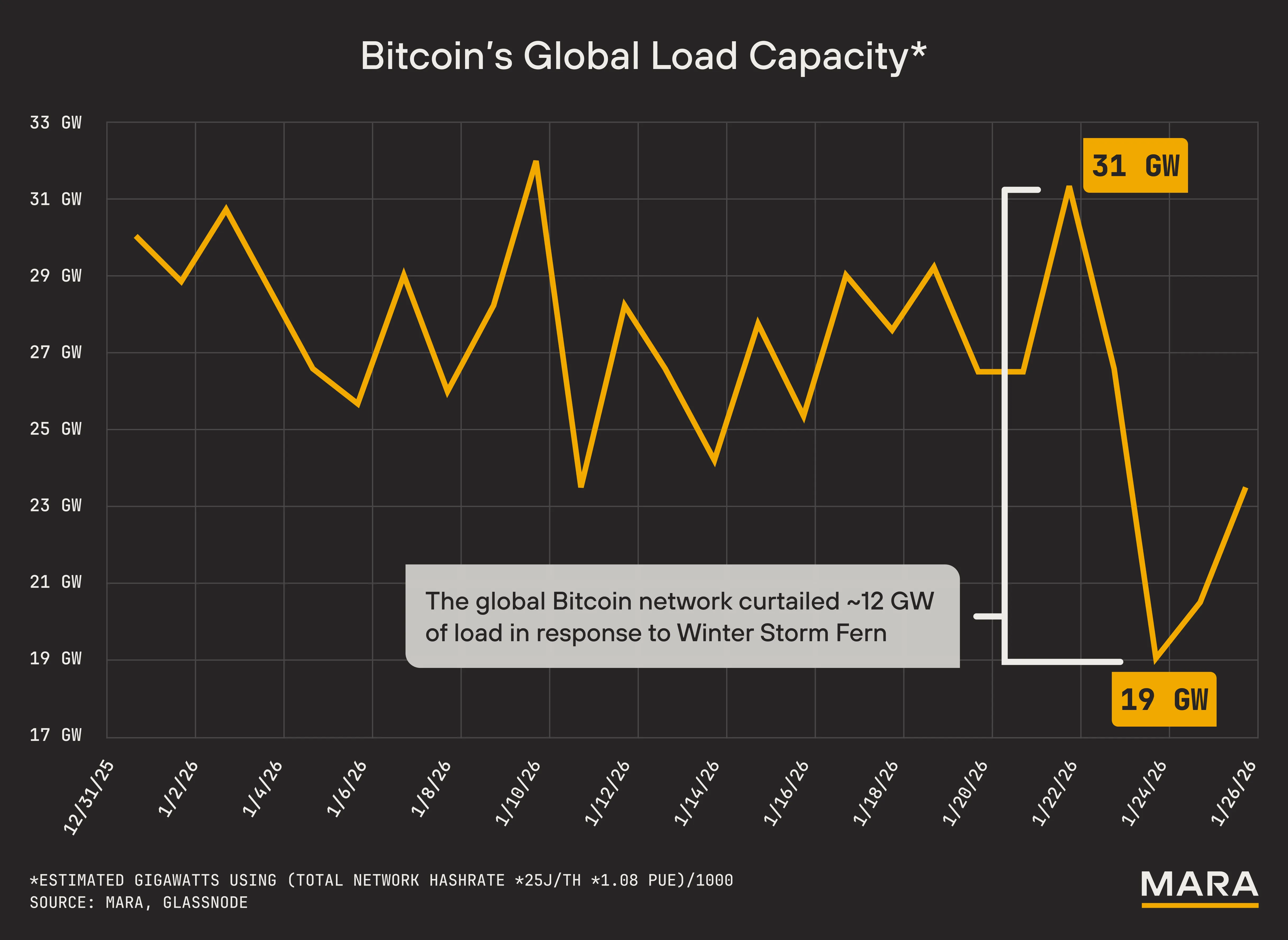
Rather than adding new generation to an already strained system, we reduced demand by rapidly curtailing our large-scale data center operations. Because Bitcoin mining is interruptible, we can power down our facilities in minutes, freeing up substantial capacity on the grid. Across the Bitcoin network, we estimate that approximately 12 gigawatts of load were shed in response to the storm.
Bitcoin Mining as a Virtual Power Plant
MARA continuously monitors grid conditions and plans curtailments in advance when elevated stress is expected. Ahead of Winter Storm Fern, our energy teams forecasted tightening conditions days before the cold arrived and coordinated early with grid operators so our response could be incorporated into broader system planning.
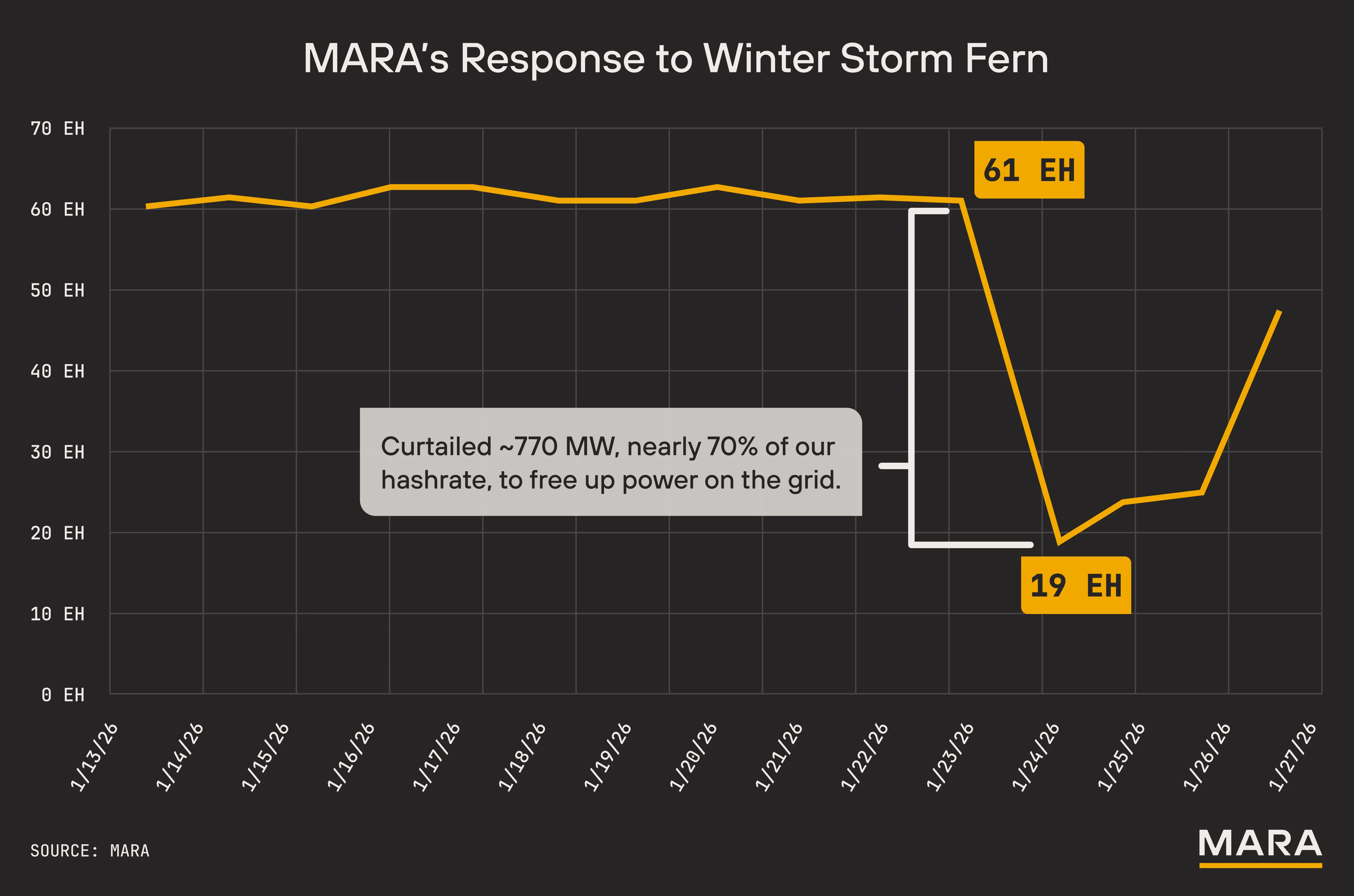
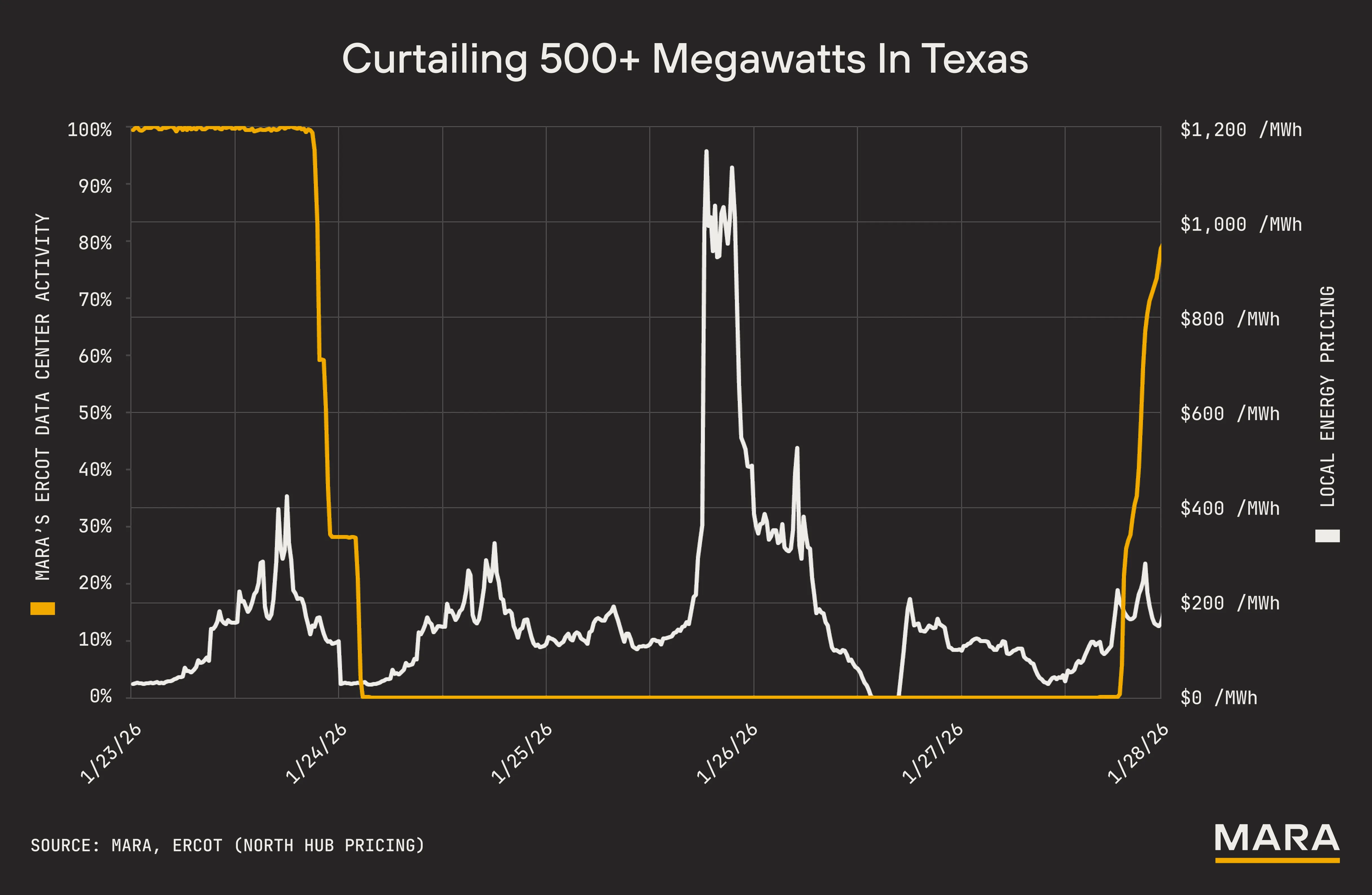
This advance preparation allowed us to act before conditions deteriorated. Before the storm reached peak intensity, we proactively powered down nearly 70% of our global hashrate. By the time weather conditions were at their worst, our consumption in affected regions had already been curtailed.
Because these reductions occurred at industrial scale, they translated into meaningful flexibility for grid operators. In total, we voluntarily curtailed approximately 770 megawatts across three of the nation’s largest power markets:
- ~550 MW in ERCOT
- ~120 MW in PJM
- ~100 MW in SPP
During the height of the event, energy prices in the ERCOT North Hub spiked to approximately $1,200/MWh.
By staying offline during these periods of extreme volatility, we helped relieve pressure on the system. In effect, our data centers functioned as a virtual power plant — making energy available not by generating electricity, but by reducing demand at critical moments.
Supporting a Stable Recovery
Grid reliability depends not only on the initial response to an event, but also on how systems recover. Bringing large amounts of demand back online too quickly can introduce new instability and create secondary challenges for operators.
To support a stable recovery, MARA remained offline for the duration of the event and followed strict ramp rates when restarting operations. This controlled return helped ensure the system could normalize without triggering additional stress.
Winter Storm Fern tested the grid. And MARA’s infrastructure performed exactly as intended. Through early forecasting, proactive curtailment, and a controlled return, we provided grid operators with flexibility when it mattered most.
Investor Notice
Investing in our securities involves a high degree of risk. Before making an investment decision, you should carefully consider the risks, uncertainties and forward-looking statements described under the heading "Risk Factors" in our most recent annual report on Form 10-K and any other periodic reports that we may file with the U.S. Securities and Exchange Commission (the "SEC"). If any of these risks were to occur, our business, financial condition or results of operations would likely suffer. In that event, the value of our securities could decline, and you could lose part or all of your investment. The risks and uncertainties we describe are not the only ones facing us. Additional risks not presently known to us or that we currently deem immaterial may also impair our business operations. In addition, our past financial performance may not be a reliable indicator of future performance, and historical trends should not be used to anticipate results in the future. See "Forward-Looking Statements" below.
Forward-Looking Statements
This press release contains forward-looking statements within the meaning of the federal securities laws. All statements, other than statements of historical fact, included in this press release are forward-looking statements. The words "may," "will," "could," "anticipate," "expect," "intend," "believe," "continue," "target" and similar expressions or variations or negatives of these words are intended to identify forward-looking statements, although not all forward-looking statements contain these identifying words. Such forward-looking statements are based on management’s current expectations about future events as of the date hereof and involve many risks and uncertainties that could cause our actual results to differ materially from those expressed or implied in our forward-looking statements. Subsequent events and developments, including actual results or changes in our assumptions, may cause our views to change. We do not undertake to update our forward-looking statements except to the extent required by applicable law. Readers are cautioned not to place undue reliance on such forward-looking statements. All forward-looking statements included herein are expressly qualified in their entirety by these cautionary statements. Our actual results and outcomes could differ materially from those included in these forward-looking statements as a result of various factors, including, but not limited to, the factors set forth under the heading “Risk Factors” in our most recent annual report on Form 10-K, and any other periodic reports that we may file with the SEC.

.webp)