Video
January 8, 2026
Bitcoin Mining in the Age of AI
Table of contents
The following blog distills key themes discussed in the video above.
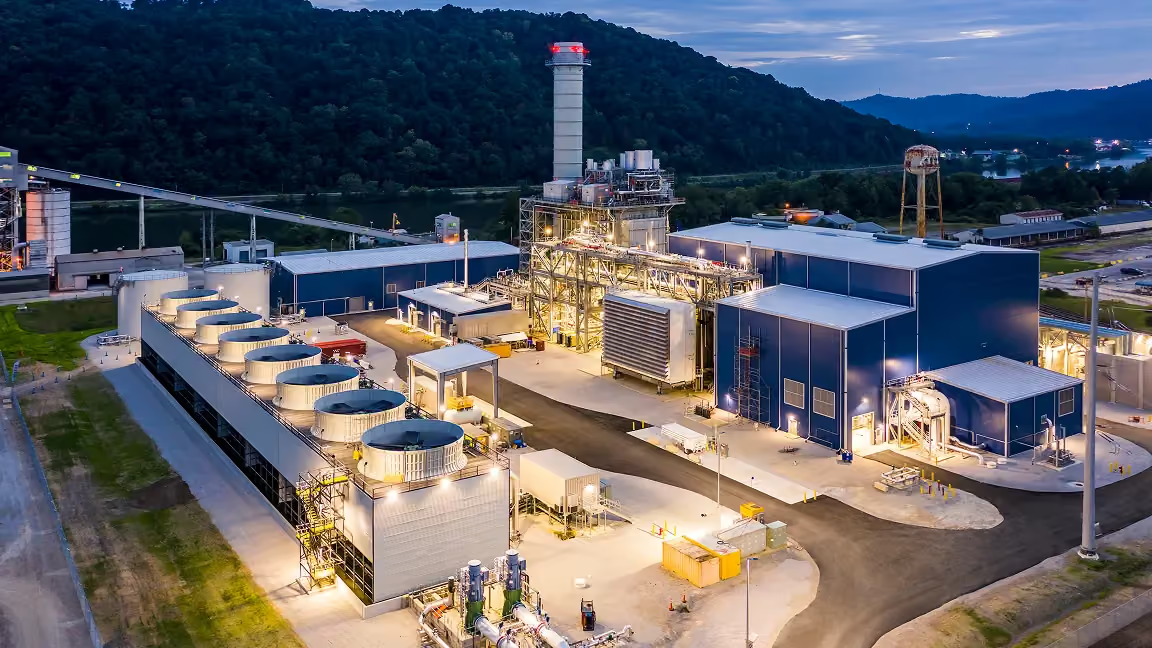
Across the United States, new data centers are racing to secure the same scarce input: reliable power and the infrastructure to use it. That tension is now showing up in boardrooms, permitting meetings, and policy conversations about competitiveness, national security, and energy system modernization.
In a recent episode of the “Bitcoin Rails” podcast, MARA CEO Fred Thiel joined host Isabel Foxen Duke to zoom out and talk about where Bitcoin mining is headed as AI demand ramps. The discussion is focused on a simple reality: land, power, and operational control determine who can scale. The operators who win are the ones who can secure or partner for energy, build the right infrastructure for different workloads, and stay flexible across workloads, markets, and regulatory environments.
From Hosted Miner to Infrastructure Owner
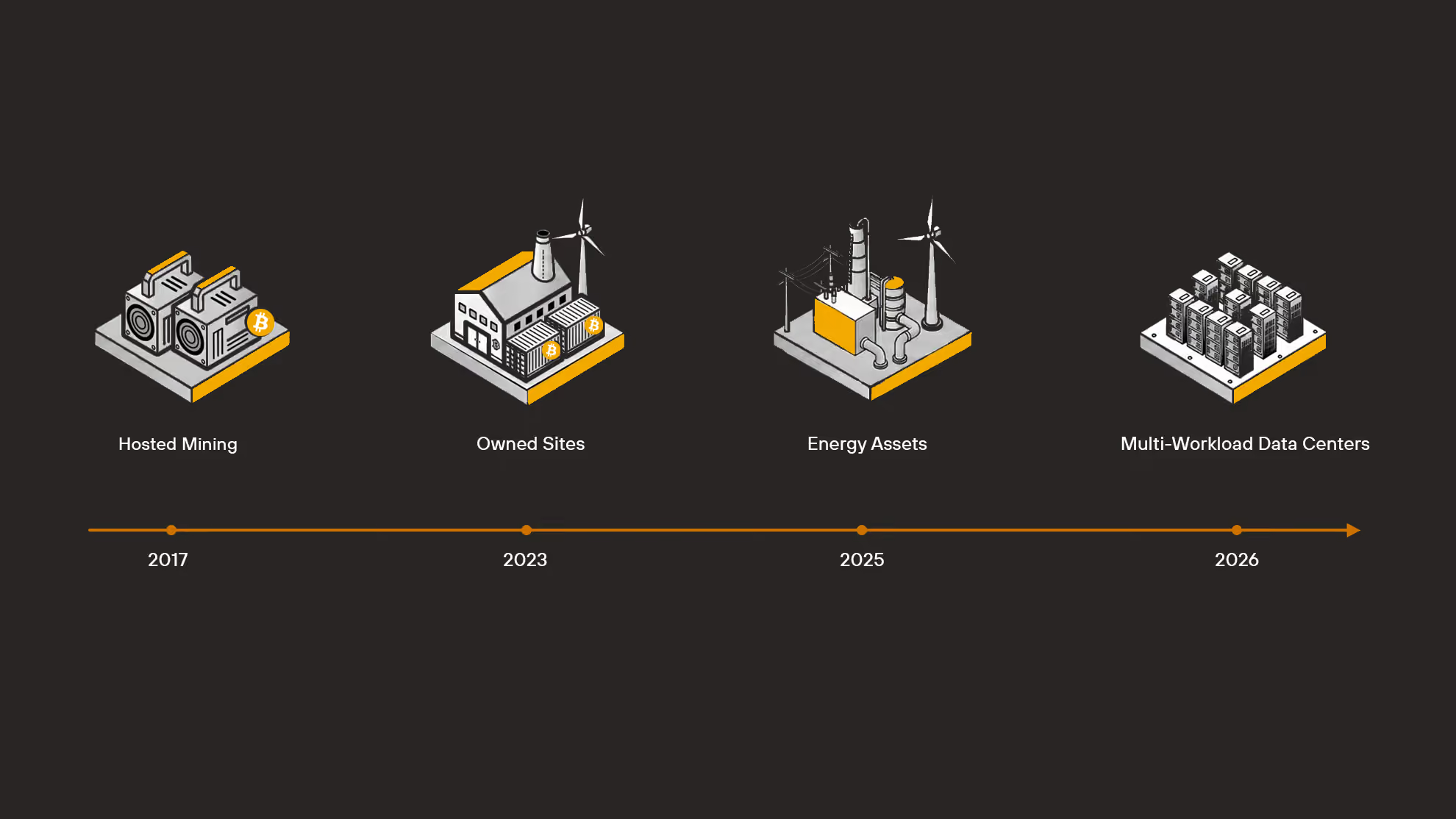
MARA’s early model relied heavily on third-party hosting. It was a capital-efficient way to scale quickly, especially during periods of rapid market expansion. Over time, however, as operations grew, the limitations of that model became more apparent. When someone else owns the site, they also influence uptime, maintenance standards, and how quickly you can make changes — factors that truly matter at scale.
That is why, as Fred explains, MARA shifted toward owning the infrastructure it operates in. Operational control is not just a financial choice. It is how you improve performance, uptime, and keep the option to support new workloads as compute demand changes.
This shift to ownership was also a practical timing advantage. Amidst the weaker market, MARA was able to acquire a significant portion of the capacity where it hosted its miners for less than it would have cost to build the sites ourselves. Moreover, MARA was able to secure already-built capacity ahead of the next growth cycle. That move highlights a pattern that applies to both mining and AI: capital and compute can be deployed quickly, but capacity often has the longest lead time. Permitting, interconnection, power equipment, and construction schedules do not compress just because demand rises.
Capacity Is the New Competitive Advantage
Bitcoin mining sites and AI data centers can look similar from a distance, but their requirements differ. Mining sites are often designed for rapid deployment and flexible operations. AI and high performance computing typically demand higher reliability, tighter networking requirements, and more robust cooling. As Fred puts it in the conversation, AI facilities can be far more expensive per megawatt than mining sites.
That cost gap matters, but another point is flexibility. A flexible load changes what power is worth. Bitcoin mining can curtail quickly, which means it can participate in demand response and help stabilize the grid during peak events. That flexibility also creates optionality inside a site. If your infrastructure supports multiple compute profiles, you can shift what you run based on power prices, grid conditions, and customer demand.
Fred argues that if large loads can reduce usage a small percentage of the time, significant capacity becomes usable that would otherwise sit behind reliability constraints. According to a recent study by Duke University, there are 126 gigawatts of power available today that large loads like AI operators could use if they were flexible just 1% of their maximum time.
In practical terms, flexibility changes what power can be accessed in the first place. If large loads are willing and able to curtail a small fraction of the time, substantial capacity that would otherwise remain unavailable can be brought online. For operators, that means flexible loads like Bitcoin mining are not just consumers of power, but tools for unlocking constrained energy resources
The Next Era of Digital Infrastructure
As AI moves into sensitive enterprise and public sector use cases, many organizations are cautious about sending their most sensitive data into shared environments. That is driving demand for private deployments and enterprise-grade operating standards, where security, uptime, and control are part of the product.
This trend also raises the bar for operational security in Bitcoin mining itself. Hardware, firmware, and pools become strategic surfaces that require more scrutiny. For MARA, building internal capabilities like MARAPool strengthens operational control by reducing dependence on third parties, improving tuning, and enabling initiatives that require tighter control over each Bitcoin block that we mine.
Fred frames the direction as an integrated stack, where security and control are a natural byproduct of ownership. This principle bleeds into the energy angle too. Energy ownership matters because new capacity does not appear overnight. Transmission and interconnection timelines can stretch for years. Operators that move faster often do so through behind-the-meter strategies and partnerships that align generation, infrastructure, and flexible demand.
By the end of 2026, MARA's goal is to connect electrons to actions by securing power, building the right infrastructure, operating securely, and monetizing multiple compute pathways flexibly.
To go deeper on how flexible infrastructure supports AI inference, read Powering the Inference Era of AI. To learn more about how energy partnerships can expand capacity, read MPLX and MARA Announce Collaboration.
Forward-Looking Statements
This blog contains forward-looking statements within the meaning of the federal securities laws. All statements, other than statements of historical fact, included in this blog are forward-looking statements. The words "may," "will," "could," "anticipate," "expect," "intend," "believe," "continue," "target" and similar expressions or variations or negatives of these words are intended to identity forward-looking statements, although not all forward-looking statements contain these identifying words. Such forward-looking statements are based on management's current expectations about future events as of the date hereof and involve many risks and uncertainties that could cause our actual results to differ materially from those expressed or implied in our forward-looking statements.
Subsequent events and developments, including actual results or changes in our assumptions, may cause our views to change. We do not undertake to update our forward-looking statements except to the extent required by applicable law. Readers are cautioned not to place undue reliance on such forward-looking statements. All forward-looking statements included herein are expressly qualified in their entirety by these cautionary statements. Our actual results and outcomes could differ materially from those included in these forward-looking statements as a result of various factors, including, but not limited to, the factors set forth under the heading "Risk Factors" in our most recent annual report on Form 10-K, and any other periodic reports that we may file with the SEC.
Shape the future of energy with MARA
Resources
.avif)